Skip to product information
1 of 11

Silver Denarius Pendant

Silver Denarius Pendant

Regular price €225,50 EUR
Regular price Sale price €225,50 EUR
Sale Sold out
Material
Denarius

My order is urgent

If you need us to prioritize your order, contact us or send us an email to info@sophiesinjupiter.com

The care of jewelry

In this link Tips for the conservation of your jewelry we provide you with some tips to care for and preserve your jewelry.

Processing and shipping

When will my order be processed?

If the items are in stock they will be sent the next day of the order date.

Processing time is 7 business days from the date of the order. For products based on the astrological chart the processing time is 10 business days.

What is the transportation time for my order?

For shipments to Spain the shipping transit time varies between 1 and 3 business days.

For shipments to the European Union, shipping transit time varies between 4 and 10 business days.

What is the cost of shipping?

There is no shipping cost for orders within Spain.

The shipping cost to European Union (EU) countries is 7 euros.

Description of the Silver Denarius Pendant

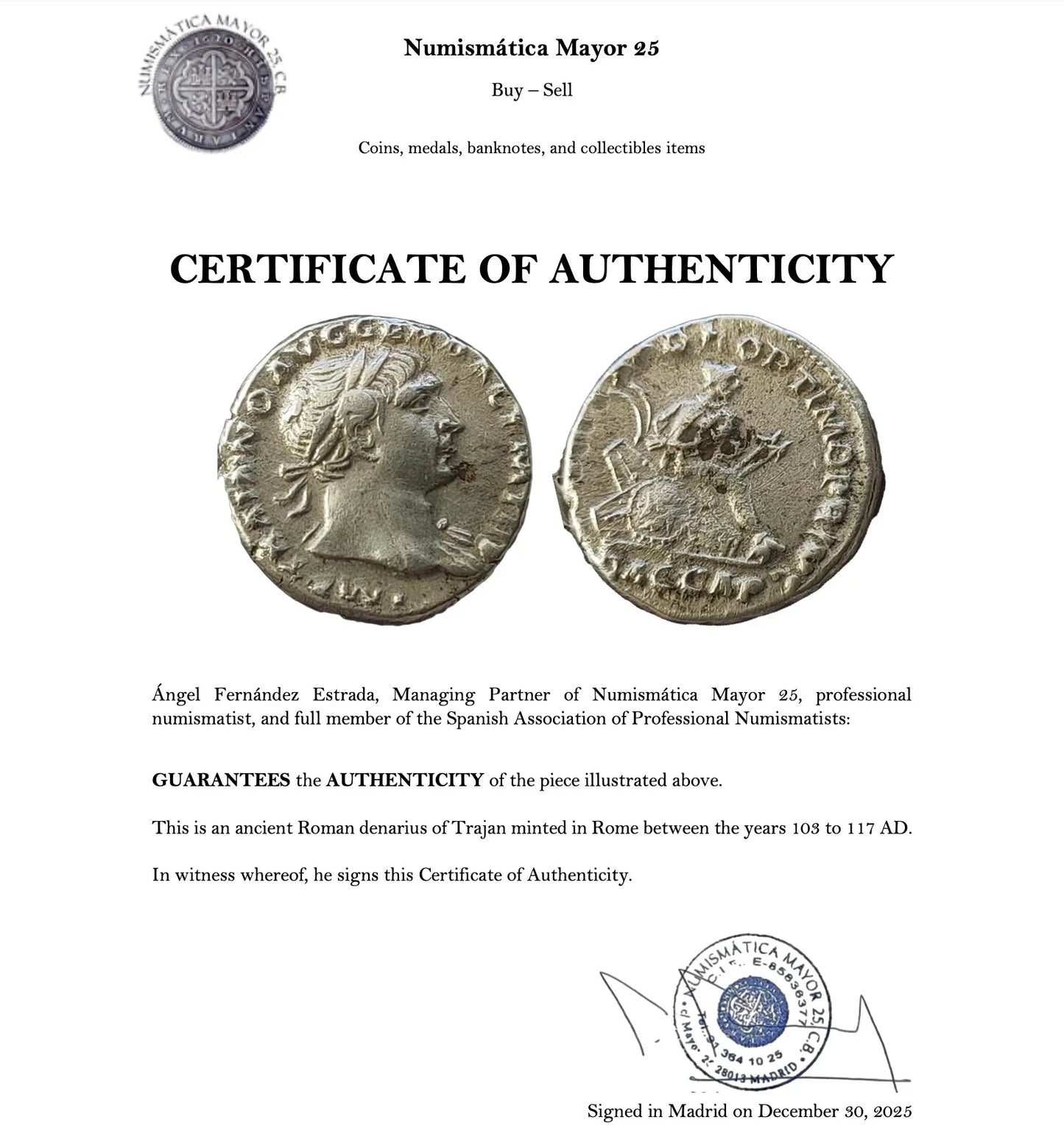
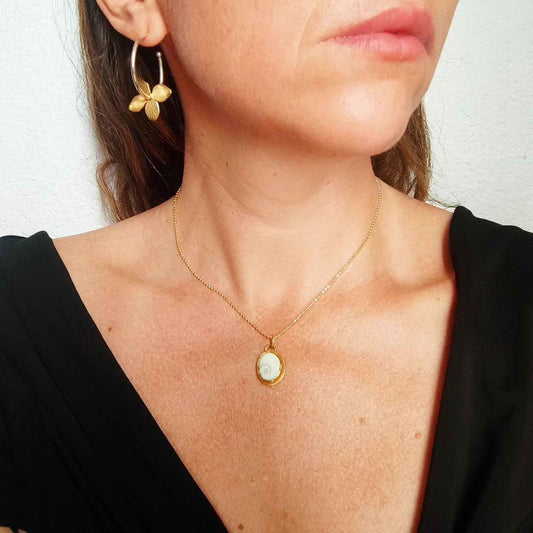
Handmade pendant featuring an authentic Roman coin (silver denarius). The pendant comes with a certificate of authenticity for the coin, guaranteed by a professional numismatist.

Available in vermeil gold yellow or pink, in sterling silver or in brass plated with yellow or rose gold. The chain is made of sterling silver and plated with yellow or rose gold.

For more information, check out our blog about the Gloria Antiqua collection.

Each coin is different, so the measurements may vary slightly:

  • Diameter: 2.5 cm

About the Silver Denarius Pendant

In a world where almost no one could read, the denarius was the emperor's official means of communication with the people.

The obverse of each denarius bore the emperor's face. This was his official portrait. From these, the Romans could tell if the emperor was young; in that case, the coin seemed to proclaim "I have energy"; if he was old, it seemed to whisper, "I have wisdom."

Of course, not all denarii are the same. For example, Domitian's coins are famous for their almost pure silver and incredible artistic detail. Trajan's denarius is the denarius of success, minted during Rome's period of greatest expansion. And Geta's denarii are extremely valuable and very rare, as his brother Caracalla tried to melt down all the coins bearing his image.
Some of the faces minted on these coins were those of women, for example, Julia Maesa, grandmother of two emperors and a true strategist, or the Julia Soaemias, whose denarii sought to legitimize their position in a man's world.

It was on the reverse of the coins where the magic of political marketing took place. Depending on the word minted, the message was different:

  • Pax: "I have ended the wars."
  • Victoria: "I have crushed my enemies."
  • Justitia: "I am a lawful and just leader."

And it wasn't just about words, but also about carefully chosen images, capable of conveying a message even to those who couldn't read.

  • Infrastructure: Bridges, aqueducts, and roads proclaimed: "With me, Rome works." The emperor presented himself as the guarantor of order, commerce, and progress. Some of the most valuable denarii feature infrastructure that still exists today.
  • Public buildings: Temples and forums reinforced the idea of stability and continuity, linking the ruler to the eternal greatness of Rome.
  • Gods and symbols: These associated the emperor with divine protection, legitimizing his power beyond the human realm.

Roman gladius may have conquered the world, but what held the empire together was its silver.

View full details